Homily on the Twenty-Fourth Sunday in Ordinary Time – Year A
Sirach 27:33–28:9 | Psalm 103 | Romans 14:7–9 | Matthew 18:21–35
Some wounds heal quickly, but others can stay with us for years. A word someone said. A betrayal. An injustice. A disappointment. Something someone did to us that still hurts whenever we remember it. On the outside, we may keep moving forward. We work, smile, come to Mass, and continue with our lives. But deep inside, we may still be having a conversation with someone who is no longer even present.
That is why Peter’s question in today’s Gospel is so deeply human: “Lord, if my brother sins against me, how often must I forgive him?”
Peter suggests seven times. In fact, he is being generous. But Jesus answers, “Not seven times, but seventy-seven times.”
Jesus is not teaching mathematics. He is teaching us a new way to live.
It is almost as if Jesus were saying to him: “Peter, stop counting.” Stop counting how many times people have failed you. Stop counting how many times they have hurt you. Stop counting how much they owe you. A heart that truly loves cannot spend its life keeping a record of every wound.
Today’s readings offer us three important lessons.
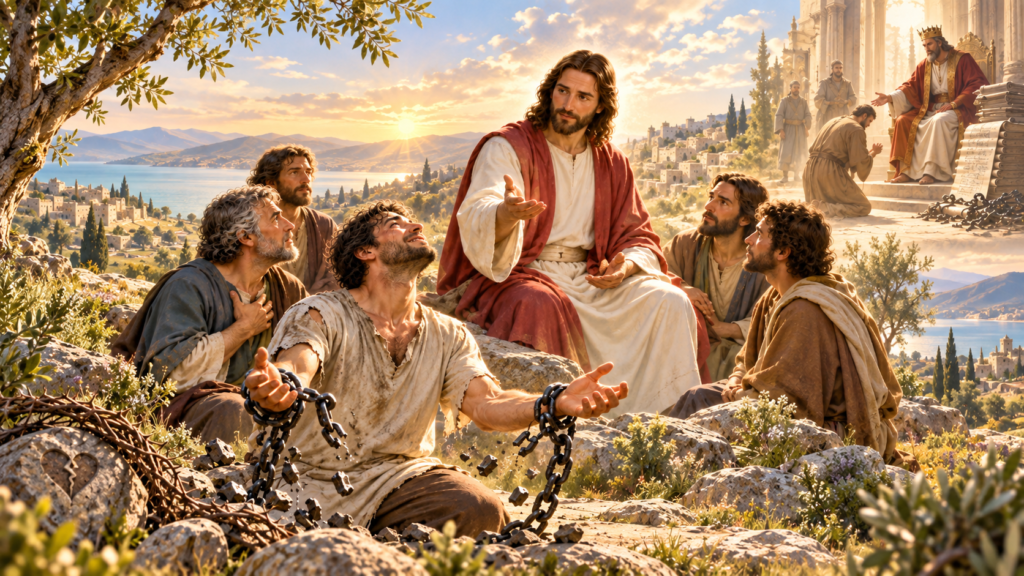
The first is this: resentment eventually imprisons the person who holds on to it. The first reading says that wrath and anger are hateful things, yet the sinner holds tightly to them. That idea of “holding on” describes very well what often happens to us. Someone hurts us once, but afterward we are the ones who keep holding on to the wound. We replay it in our minds. We go over what happened. We think about what we should have said. We imagine what we would say now. We return again and again to the same moment. Something that may have happened only once begins to happen inside us every day.
Resentment promises justice, but very often it steals our peace. We see this clearly in Jesus’ parable. The servant who refuses to forgive has his fellow servant thrown into prison. Yet by the end of the story, he is the one who ends up imprisoned. That is a powerful image because when we refuse to forgive, we may think we are punishing the other person, but many times we are the ones who remain chained. We keep carrying the person who hurt us. We keep carrying what happened to us. We allow a wound from the past to keep controlling our present. And God did not create us to live that way.
We should also be clear about something important. Forgiveness does not mean saying that what happened was right. It does not mean excusing injustice. It does not mean automatically trusting again someone who betrayed us. And it does not mean allowing someone to continue hurting us. Sometimes forgiveness must go together with healthy boundaries, prudence, distance, and even the legitimate pursuit of justice. Forgiveness means something deeper: deciding that what someone did to me will not have the final word over my life.
The second lesson is this: we learn to forgive when we remember how much we ourselves have been forgiven. This is the key to the whole parable. The first servant owes an enormous debt, a debt he could never repay. He falls before the king and begs, “Be patient with me, and I will pay you back.” But the king does something far greater than what the servant asks. He does not simply give him more time. He forgives the entire debt.
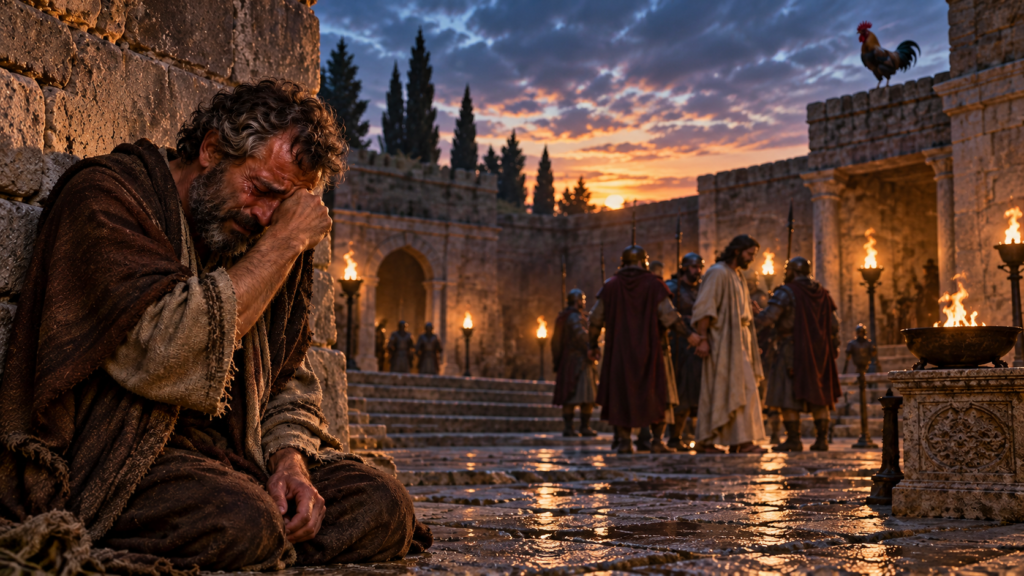
And yet, as soon as that servant leaves, he finds another man who owes him much less. He grabs him and demands, “Pay back what you owe.”
That is the tragedy of the parable. This man received mercy, but almost immediately forgot the mercy he had received.
We can fall into the same trap. Forgiveness becomes difficult when all we can see is what other people owe us. But something begins to change when we also remember how much has been forgiven in our own lives. Today we proclaimed in the Psalm: “The Lord is kind and merciful.” And even more beautifully, Scripture reminds us that God does not deal with us according to our sins or repay us according to our faults. That is our God.
We are not a community of perfect people. We are a community of forgiven sinners.
And this is so important to Jesus that he placed it at the very heart of the prayer he taught us. Every day we pray: “Forgive us our trespasses, as we forgive those who trespass against us.” In biblical language: “Forgive us our debts, as we forgive our debtors.”
Think for a moment about what we are saying. Every time we pray the Our Father, we ask God for mercy while at the same time recognizing that we are called to live mercifully toward others. We cannot ask for mercy with one hand while holding tightly to resentment with the other.
We do not forgive because the other person necessarily deserves our forgiveness. We forgive because every day we live by a mercy that we ourselves did not earn.
And again we can hear Jesus saying: “Peter, stop counting.” Stop counting the debts of others and remember all the times God has shown mercy to you. Stop counting all the times someone has failed you and remember all the times God has lifted you up. Stop counting only the wounds you have received and begin to count the mercies you have received.
God does not relate to us by keeping a cold record of every failure. God always opens a door for us to begin again.
The third lesson is this: forgiveness is a path to freedom and happiness. Saint Paul tells us today, “None of us lives for oneself.” And then he says something beautiful: whether we live or die, “we are the Lord’s.”
We belong to the Lord.
That is our identity.
So when we have been wounded, the Christian question cannot only be, “What did they do to me?” We must also ask: “After what they did to me, who is going to rule my heart now?”
Will it be that person? That betrayal? That injustice? That memory? Or will it be Christ?
If we belong to the Lord, we cannot hand over the keys to our heart forever to the person who hurt us.
This is where we discover something very important: forgiveness is deeply freeing. Resentment is heavy. It forces us to drag the past with us wherever we go. We may think that we are keeping an unpaid debt open against another person, but very often we are the ones who remain imprisoned by it.
God created us for something greater.
God created us for happiness. That is our vocation. Not a shallow happiness without problems or suffering, but the deep happiness of a person who lives reconciled with God, with oneself, and with others.
Refusing to forgive can condemn us to remain trapped in the smallness of a world that does not know how to rise above revenge. The world often says: “If you hurt me, I will hurt you. If you insult me, I will insult you. If you owe me, I will make you pay. If you wound me, I will never forget it.”
But Christians are called to something higher.
We are called to rise to the level of God’s love. And God’s love rises above our small calculations, our scorekeeping, and our pettiness.
That is why Jesus insists: “Seventy-seven times.”
And it is as though he is saying to each one of us: “Stop counting.”
Stop counting so that you can be free.
Stop counting so that the wound does not become your identity.
Stop counting so that the past no longer controls your present.
Stop counting because forgiveness means refusing to allow the person who hurt you to continue having power over your happiness.
Perhaps today there is someone you still cannot completely forgive. Do not be afraid to admit that before God. Forgiveness does not always happen in a single moment. Sometimes it is a journey. It may begin with a simple prayer:
“Lord, it still hurts. I still do not know how to forgive. But I do not want to keep living tied to this resentment. Help me.”
That is already a beginning.
You may still remember what happened, but one day you may be able to remember it without hatred. A scar may remain, but a scar is not an open wound. A scar remembers what happened, but it also tells us that what once wounded us no longer has the power to destroy us.
Forgiveness does not change the past, but it can change our future. Forgiveness does not turn evil into good, but it prevents evil from continuing to rule our lives. Forgiveness does not always restore a relationship, but it can restore our heart.
And above all, forgiveness allows us to say:
“My heart does not belong to my wound.
My heart does not belong to the person who hurt me.
My heart belongs to the Lord.”
So today, when Peter asks, “How many times must I forgive?”, we can hear Jesus answering each one of us:
“Stop counting.”
Stop counting the wounds. Stop counting the debts. Stop counting the times people failed you. And begin counting the mercies: the times God forgave you, the times God was patient with you, the times God lifted you up, the times God gave you another beginning.
Because we have been forgiven.
Because we belong to the Lord.
And because we were created to live free, to love, and to be truly happy.
Forgiveness does not change the past, but with the grace of God, it can set our future free.
Amen.