Opinion
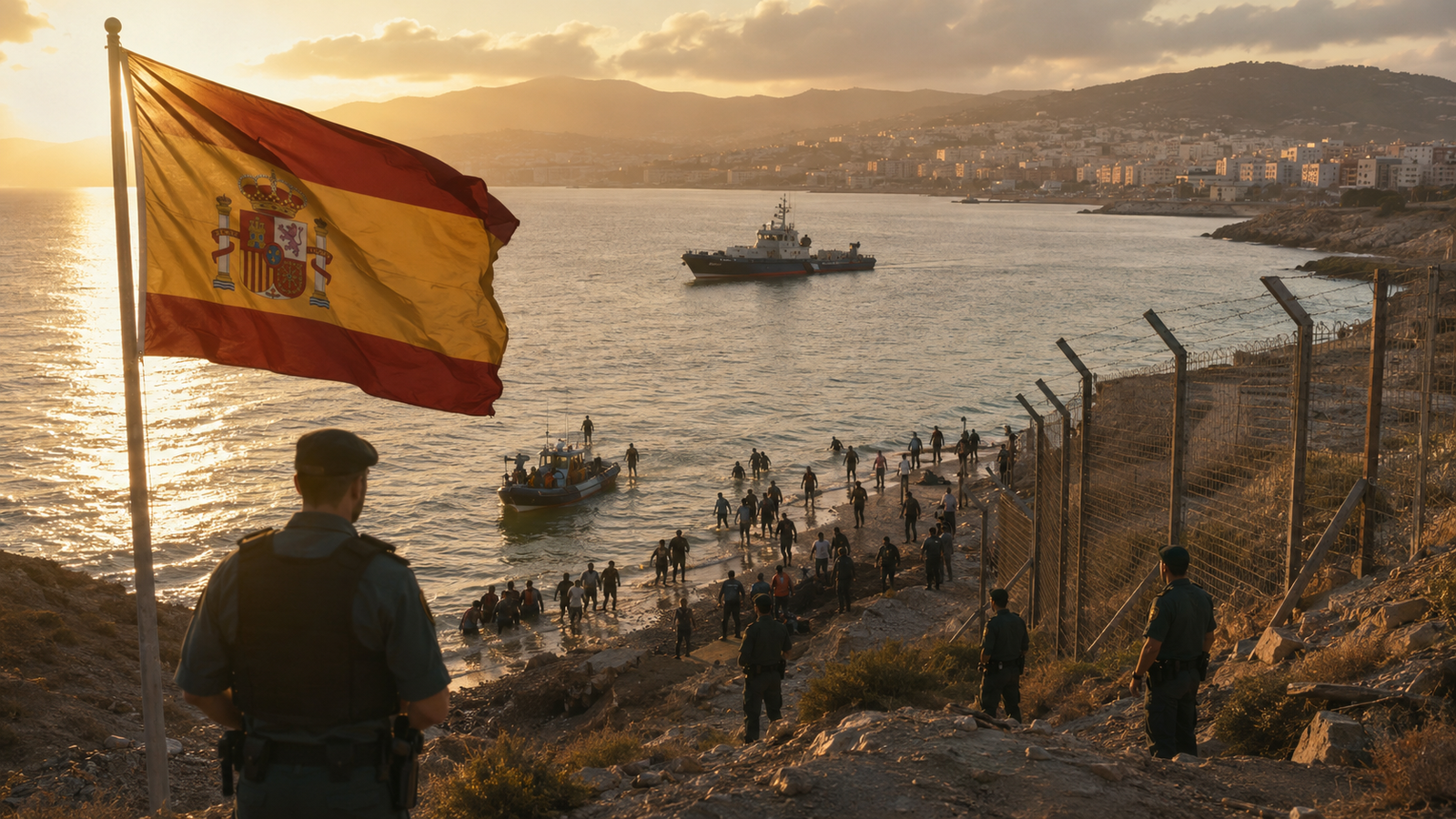
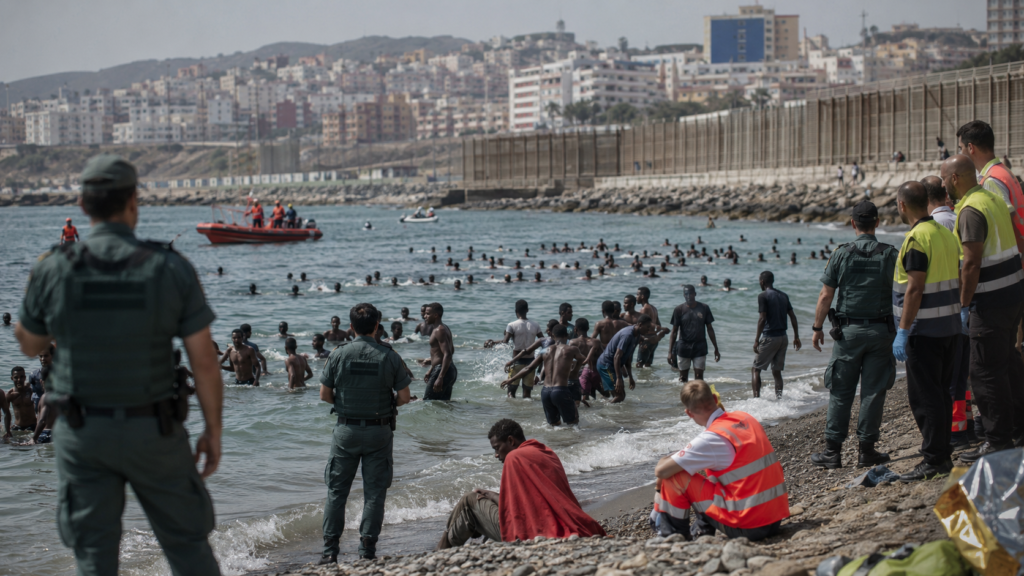
This week, while half of Spain argued about the heat wave and the other half about soccer, the city of Ceuta — under internationally recognized Spanish sovereignty since 1668, more than a century before the United States existed, for those keeping score —¹ lived through something diplomats call “migratory pressure” and any resident of the Tarajal district calls by its name: a flood. By Thursday morning, roughly 1,500 people had swum in from Morocco over the course of about a week, with some days approaching 300 entries.² And over that same Thursday, thousands more crossed by sea and by land: estimates at press time placed the total between 2,000 and 3,000, with the count still open.³ To grasp the scale: that first week alone equaled nearly 2% of the city’s entire population. Imagine 70,000 people entering the city of Madrid, uncontrolled, in seven days. That, proportionally, is what Ceuta is living through. And it is not the first time: in May 2021, around 8,000 crossed in two days, and Spain deployed the army — armored vehicles included — to the Tarajal area.⁴
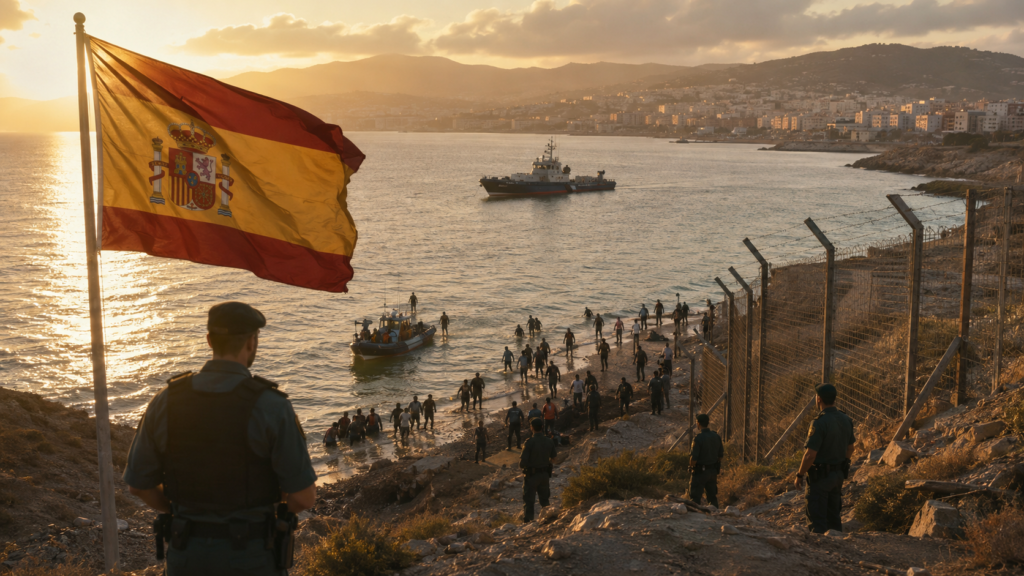
The president of Ceuta, Juan Jesús Vivas, has asked the national government for what the law allows him to ask: to declare a Situation of Interest for National Security under Articles 23 and 24 of Spain’s National Security Act, to assume unified command, and to close the border.⁵ The city’s entire assembly backed him unanimously — a rare bird indeed in Spanish politics.⁶ Madrid’s answer? The Interior Ministry replied by citing civil protection law, which does not list migratory flows among its classified risks.⁷ Except Ceuta never invoked that law: it invoked the National Security Act, an entirely different legal instrument. In other words: they cry for help at door A, and you answer that door B is closed. The disagreement is not merely political; it is also a dispute over which legal tool applies. And while the jurists argue, people keep coming in through the water.
To be fair, the government did announce police and military reinforcements — “the Armed Forces will reinforce the Guardia Civil,” reads the official statement —,⁸ reached an agreement with Morocco to expedite, within the applicable legal framework, the return of those who entered irregularly,⁹ and confirmed that Prime Minister Pedro Sánchez and Interior Minister Grande-Marlaska would visit the city. Translation: it is not an emergency, but we are sending the army and the prime minister. Consistency level: socialism.
The Detail Almost No One Reports
Here comes the legal detail I recommend you memorize for your next dinner-table debate: in early July, a Supreme Court ruling was made public establishing that migrants who reach Ceuta and Melilla by sea cannot be summarily returned — the so-called “hot returns,” or pushbacks — but must instead go through the ordinary procedure, with all its guarantees.¹⁰ Mind the nuance: deportations remain legally possible; what changed is the fast track.
Did the ruling cause this flood? Let us be honest — that is what footnotes are for: the causal link is not proven. What is documented is the timeline — through July 15, not a single migrant had arrived in Ceuta by sea in all of 2026; in all of 2025, there were four;¹¹ three weeks after the ruling, thousands — and the government’s claim that trafficking networks spread a self-serving interpretation of the decision to encourage crossings.¹² Let each reader do the math. I will only say that signals of weakness always find an audience, and that this audience owns life vests.
As for Morocco: Rabat’s use of migratory pressure as a political instrument has documented precedent — the European Parliament expressly condemned it after the 2021 crisis, including the use of minors —.¹³ That it deliberately orchestrated this wave is not proven, and Rabat denies it, blaming the smuggling mafias. But when a neighbor has a track record, one locks the door properly. Even Italy’s foreign minister declared himself in favor of temporarily suspending Schengen with Spain — remarks that got the Italian ambassador summoned in Madrid.¹⁴ When Rome hints that you are Europe’s weakest link — and that reading is mine, not Tajani’s — the least one can do is blush. Brussels, meanwhile, offered Frontex assistance.¹⁵
What History Teaches (and What Europe Is Unlearning)
And here is where this Cuban — a proud heir of the language of Cervantes and the faith of Isabella — permits himself a history lesson. Ceuta is no geographic footnote: it is the front line of a frontier the Iberian Peninsula has known since the year 711. Over the course of nearly eight centuries, the Christian kingdoms of the peninsula carried out the process tradition calls the Reconquista, completed by the Catholic Monarchs at Granada in January 1492. And that very same year, an expedition sponsored by the Crown of Castile reached the Americas.¹⁶ From a Catholic and Hispanist perspective — which is mine, and I declare it without embarrassment — it is hard not to see Providence in such a script: the year Spain finished recovering herself was the year she poured herself out upon the world. From that was born what we call Hispanidad: a civilization of faith, language, and mestizaje, of which the Spanish-American nations — mine included — are daughters. That is not nostalgia. It is identity. And whoever forgets who he is ends up unable to defend even where he begins.
Meanwhile, the neighbors offer mirrors worth looking into. In France, it was Emmanuel Macron himself who spoke explicitly of “Islamist separatism” and championed a 2021 law to reinforce republican principles — the Spanish right did not say it; the Élysée Palace did.¹⁷ In the United Kingdom, the 2021 census documented that Christians fell below 50% in England and Wales for the first time — a shift with multiple causes, secularization included, but one that portrays a real transformation within a single generation.¹⁸ No serious person claims every immigrant is a threat: that would be as false as it is unjust, and the vast majority of those who cross seek what anyone would seek — bread and a future. What the European experience suggests is something else: that mass, irregular, non-integrated immigration transforms nations, and that refusing to manage it is not compassion. It is abdication.
The Catholic Position: Charity, Prudence, and the Common Good
And what should a Catholic say? Exactly what the Catechism says — which is more balanced than our politicians. Paragraph 2241 teaches both things: that prosperous nations must welcome the foreigner in search of security and livelihood, to the extent they are able; and that public authorities may subject immigration to legal conditions for the sake of the common good, requiring immigrants to respect the material and spiritual heritage of the country that receives them.¹⁹ Whoever quotes only the first half is a demagogue; whoever quotes only the second, likewise. In my judgment, that teaching does not demand indiscriminately open borders: it demands a welcome that is generous, prudent, legally ordered, and compatible with the common good.
And here is the figure that should keep us all awake at night, left and right alike: rescuing the drowning is a sacred duty, and this Thursday the Guardia Civil recovered at least 15 bodies from the sea off Tarajal — with some Spanish outlets raising the provisional count to 18 at press time. With them, 45 migrants have now been found dead in Ceuta’s waters so far in 2026; 26 in July alone.²⁰ A system that incentivizes thousands to gamble their lives swimming, while it debates which law not to apply, is not merciful. It is complicit: with the mafias, with the blackmail of third parties, and with every body the tide returns.
Spain does not need to hate anyone in order to defend herself. She needs to remember who she is. The Catholic Monarchs did not prevail through resentment but through clarity: they knew what they were, what they believed, and what they were bound to pass on. The question Ceuta shouts at Madrid today — and at all of Hispanidad, from Cádiz to Havana — is a simple one: do we still know?
Because civilizations are not murdered. They die of forgetting. And Spain, mother of nations, has no right to forget.
References
- Ceuta was conquered by Portugal in 1415; Spanish sovereignty was recognized in the Treaty of Lisbon of 1668. — Government of Ceuta (ceuta.es); J. H. Elliott, Imperial Spain 1469–1716.
- Reuters (July 30, 2026): approx. 1,500 arrivals in the preceding week, with days approaching 300; statements by Juan Jesús Vivas. — reuters.com
- Reuters / AFP / TVE (July 30, 2026): estimates of 2,000–3,000 entries in recent days, with thousands crossing on Thursday by sea and land; official count still open. — reuters.com
- Reuters / AP (May 2021): approx. 8,000 people in two days; army and armored vehicles deployed to the Tarajal area. — reuters.com
- Law 36/2015 (Spain’s National Security Act), Arts. 23–24 (“Situation of Interest for National Security,” declared by the Prime Minister via royal decree). — boe.es (BOE-A-2015-10389); Libertad Digital (July 30, 2026).
- RTV Ceuta / Europa Press (July 30, 2026): unanimous agreement of the Board of Spokespersons of the Assembly of Ceuta. — rtvce.es; pressdigital.es
- Euronews (July 30, 2026): the Interior Ministry declines the declaration on the grounds that civil protection law (Law 17/2015) does not classify migratory flows as a risk. — es.euronews.com
- Statement by the Spanish Interior Ministry (July 30, 2026): “The Armed Forces will reinforce the Guardia Civil…” — via AFP.
- Cadena SER / Euronews (July 30, 2026): Spain–Morocco agreement to expedite returns of those who entered irregularly. — cadenaser.com; es.euronews.com
- Spanish Supreme Court, ruling made public in early July 2026: migrants arriving by sea at Ceuta and Melilla may not be subject to summary return (“pushbacks”); the ordinary procedure applies. — EFE (July 8, 2026); El Español (July 30, 2026).
- La Nación / Reuters (July 30, 2026): zero sea arrivals in Ceuta through July 15, 2026; four in all of 2025. — lanacion.com.ar
- Reuters / Cadena SER (July 30, 2026): the government attributes to trafficking networks the spread of a self-serving interpretation of the ruling. Causality has not been judicially established.
- European Parliament, resolution of June 2021: condemnation of Morocco’s use of migration control, including minors, as political pressure on Spain. — europarl.europa.eu
- El País (July 30, 2026): remarks by Antonio Tajani favoring a temporary suspension of Schengen with Spain; the Italian ambassador summoned by the Spanish Foreign Ministry. — elpais.com
- El Independiente / EFE (July 30, 2026): the European Commission offers Spain financial, technical, and operational assistance, including Frontex. — elindependiente.com
- On 1492 (capitulation of Granada, January 2; Columbus’s first voyage, October 12): J. H. Elliott, Imperial Spain 1469–1716.
- Emmanuel Macron’s speech on “Islamist separatism” (Les Mureaux, October 2, 2020) and the 2021 law “reinforcing respect for the principles of the Republic.” — elysee.fr
- Office for National Statistics (UK), 2021 Census: Christians fall to 46.2% in England and Wales. — ons.gov.uk
- Catechism of the Catholic Church, no. 2241. — vatican.va
- EFE / El Independiente (July 30, 2026): 15 bodies recovered on Thursday (9 in the morning, 6 in the evening) off Tarajal; El País, citing police sources, raised the provisional count to 18. 2026 total: 45 dead in Ceuta’s waters, 26 in July. — elindependiente.com
Press time: July 30, 2026, NYC time (early hours of July 31 in Spain).